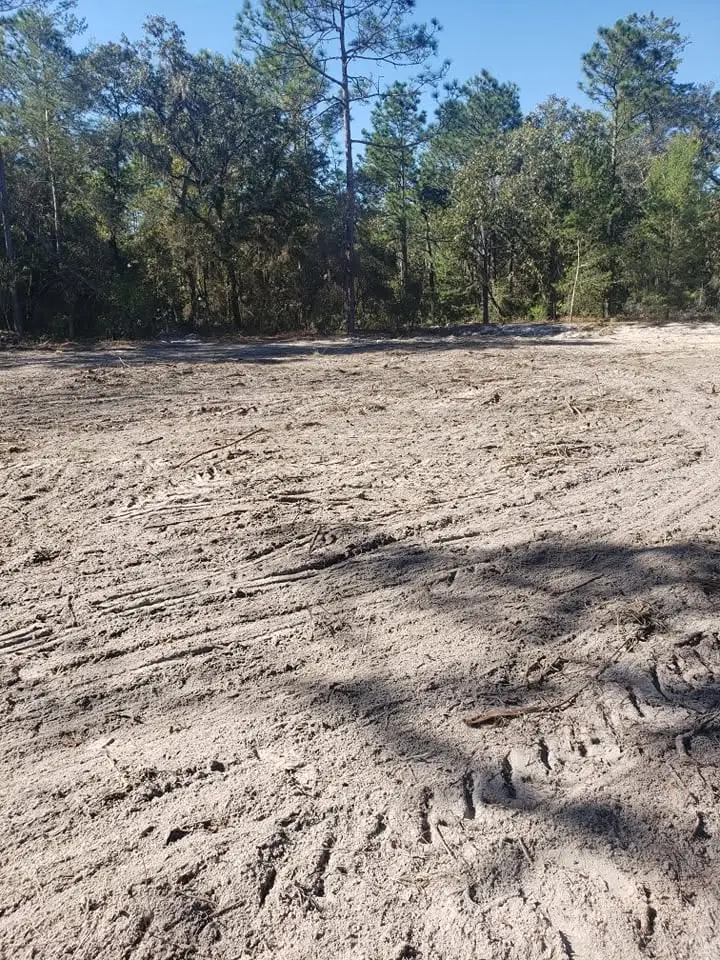
Driveway Clearing & Limerock Driveways in Ocala, FL
Cut a drive into raw land, or rebuild a washed-out one with limerock and proper drainage.
Cutting a new drive into raw land, or rebuilding one that has washed out. On rural Marion County parcels this is often the very first thing that has to happen — before a survey crew, a well driller or a concrete truck can get on the property at all.
Most washed-out driveways in this county fail for the same reason: water. Not enough crown, no ditch, or a culvert that is undersized or blocked. Adding more rock on top of a drainage problem buys you one season.
How a drive gets built properly
- Clear and cut the path Vegetation and stumps out of the route, with enough width for a truck and trailer rather than just a car.
- Strip the organics Topsoil and roots come off. Rock laid over organic material sinks into it — that is why so many drives develop soft spots.
- Sort the water first Culvert where the drive crosses a ditch, sized for what actually flows. This is the step that gets skipped, and it is the step that makes drives fail.
- Shape the base Compacted, with a crown so water sheds to both sides instead of running down the middle.
- Rock it Base material placed and compacted, then a driving surface on top.
- Cut the ditches Somewhere for the water to go once it leaves the crown. A crowned drive with nowhere to drain just moves the problem.
What moves the price on a driveway
The most predictable factor — material and machine time scale with distance.
Culverts are the usual surprise cost, and also the thing that determines whether the drive survives.
Usually goes with
Most jobs need more than one
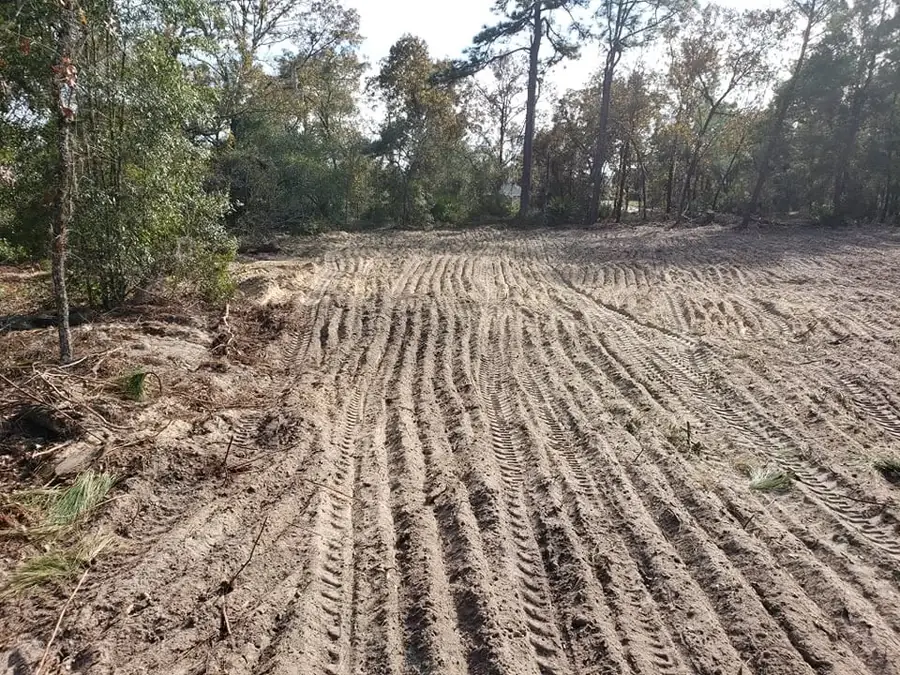
Grading & Leveling
Low spots filled, high spots cut, water sent where it should go instead of toward your slab.
Grading and leveling in Ocala →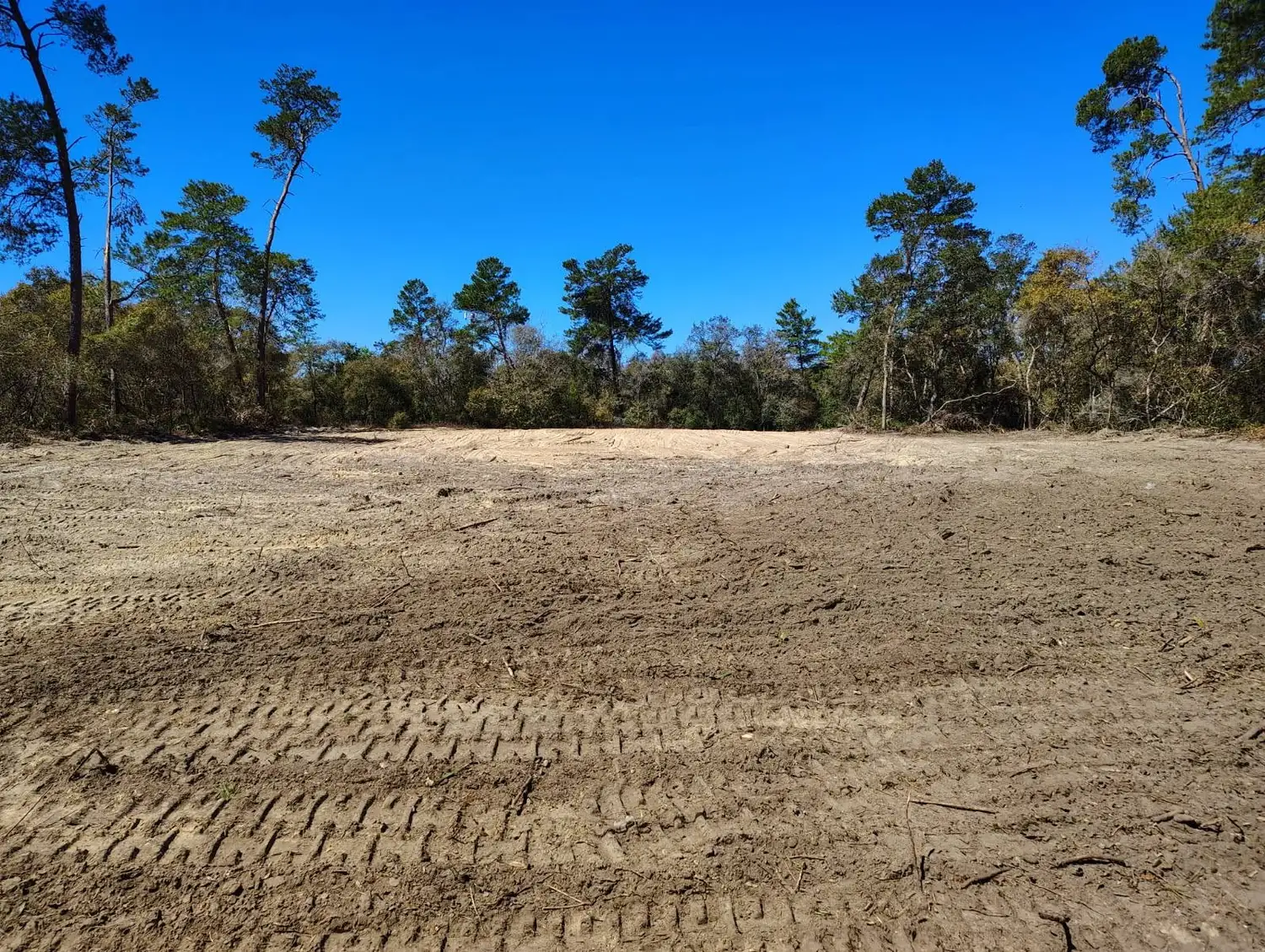
Site Prep & Pads
House pads, barn pads and shop pads cut, filled and compacted to the grade your builder asked for.
Site preparation in Ocala →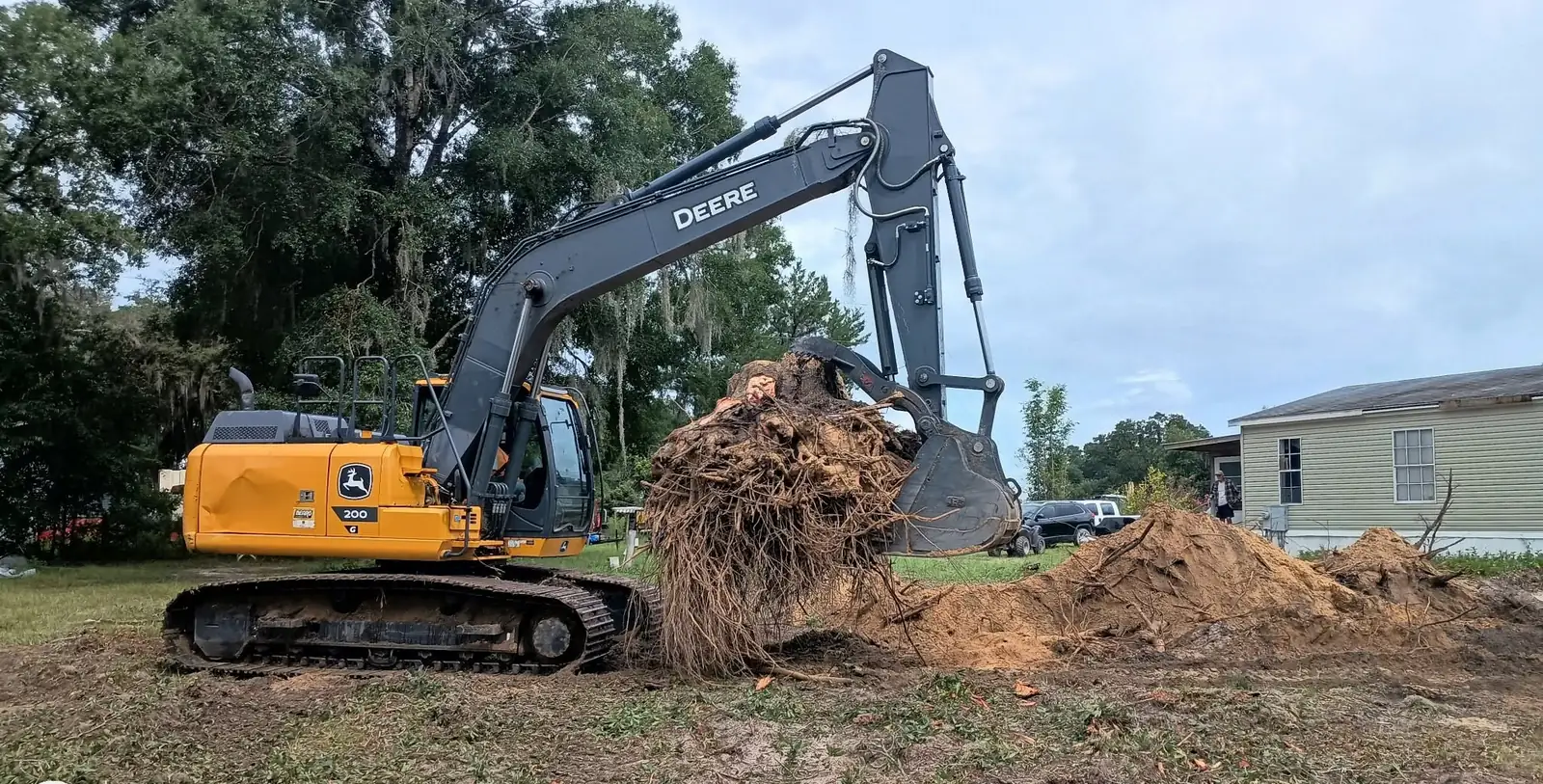
Land Clearing
Wooded lots, overgrown acreage and homesites cleared down to workable ground — brush, palmetto, stumps and all.
Land clearing in Ocala →Questions we get asked
Driveways questions
Why does my driveway keep washing out?
Do I need a culvert?
How wide should a rural driveway be?
Can you fix just the bad section?
Costs, permits, timing and more: read the full land clearing FAQ →
Where we work
Driveway clearing and installation across Marion County
Free estimates
Get your estimate today
Tell us where the property is and what you need done. We'll call you back and come walk it with you — free, and no obligation either way.