Explainer · 9 min read
Clearing and Grubbing Explained: What Grubbing Is, Why It Costs Extra, and When You Can Skip It
Clearing takes down everything above the ground. Grubbing takes out everything below it — stumps, root balls, the palmetto root mat and buried debris. On a wooded acre in Marion County, clearing runs about $1,200–$3,500 (light) to $3,400–$6,200 (heavy), and full stump and root extraction adds roughly $1,000–$3,000+ per acre on top. Those are 2026 industry ranges. You need grubbing anywhere something gets built, poured or driven on. You can skip it almost everywhere else.
Somewhere on your builder’s checklist, or halfway down a land clearing estimate, there’s a line that says “clear and grub.” Most people read that as one job with a funny name. It isn’t. It’s two jobs, done with different machines, at different depths, for different prices — and the second one is where most of the money in a clearing estimate goes. This guide explains what grubbing is, why it costs what it costs, and the specific cases where you can leave it off the bill without regretting it later.
Clearing, grubbing, grading: three depths of the same job
The easiest way to understand grubbing is to think about depth. Every lot we prep in Ocala gets worked in three layers, top to bottom and then back up again.
Above grade
- Removes
- Trees, brush, vines, palmetto fronds and anything standing. Cut or pushed over and piled.
- Leaves
- Every stump and every root, still in the ground.
- Machine
- Skid steer with grapple or mulching head, excavator for big timber
- Skip it?
- Never skip it — every job starts here.
Below grade, as deep as the roots go
- Removes
- Stumps, root balls, the palmetto root mat, buried logs and old debris. Pulled out, not ground down.
- Leaves
- Clean sand with holes where the root balls were.
- Machine
- Excavator, plus a way to burn or haul the root balls
- Skip it?
- Skip it on pasture, trails and land that stays wooded.
The finished surface
- Removes
- Holes backfilled, high spots cut, low spots filled, the whole surface shaped to drain.
- Leaves
- Firm, even ground that sheds water — ready for a pad, a drive or seed.
- Machine
- Dozer or skid steer, compactor for fill
- Skip it?
- Only skip it if nothing needs to drain or sit level.
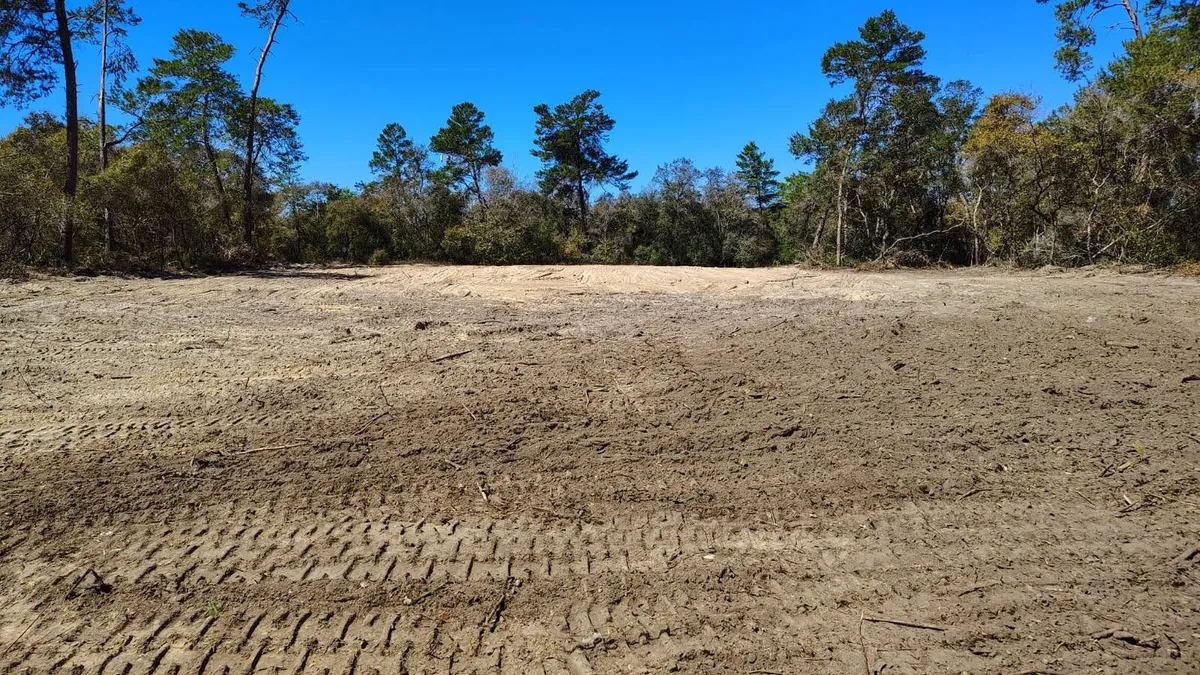
Clearing is everything above the ground line. Trees come down, brush and vines get pushed into piles, palmetto fronds get knocked flat. When clearing is finished, the lot looks open from the road — but every stump and every root is still exactly where it was.
Grubbing is everything below the ground line. The excavator digs out each stump with its root ball attached, rips up the lateral roots, and pulls the saw palmetto root mat that runs just under the sand across most of Marion County. Buried logs, old fence posts and whatever the last owner pushed into a hole in 1985 come out here too.
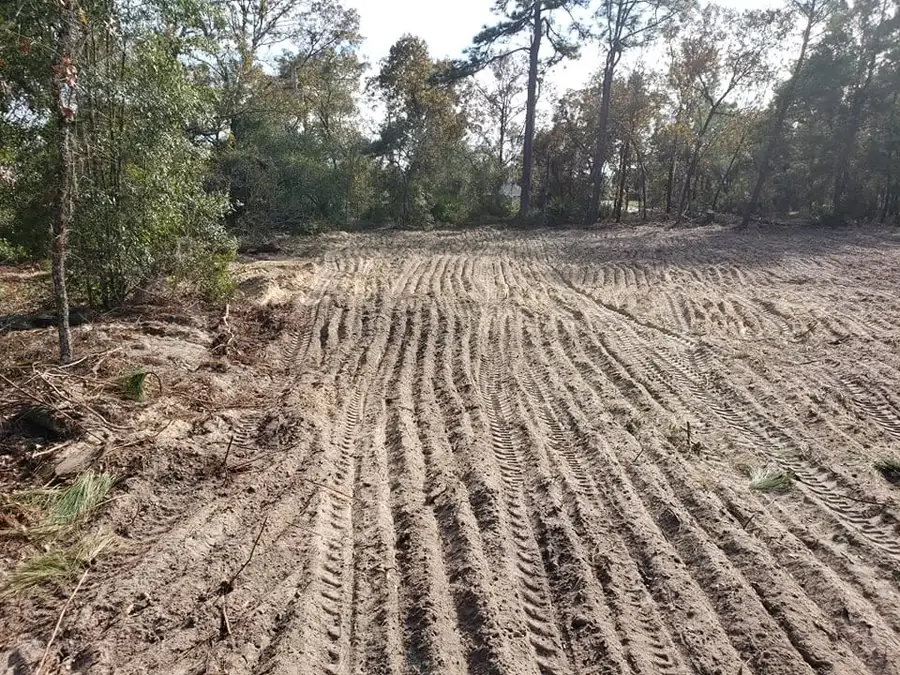
Grading puts a finished surface back on top. Grubbing leaves holes, loose sand and ridges of disturbed ground. Grading backfills the holes, compacts them, cuts the high spots, fills the low ones, and shapes the lot so water runs off it instead of sitting on it. On a building lot, the organic topsoil and root fragments get stripped off the pad area at this stage too.
You can see why the terms get bundled. On a building site you need all three, and they’re usually done in one mobilization by the same crew. But they are separate lines, and knowing which is which is how you read an estimate.
What grubbing actually removes
“Stumps” is the short answer. The long answer is more useful, because the stump you can see is the smallest part of what has to come out.
- The root ball. A pine or oak stump that’s 20 inches across at the ground sits on a root ball several times that wide. The excavator has to get under it, break it loose and lift it out — sand, roots and all.
- Lateral roots. Big roots running out sideways from the stump, often just under the surface. Left in, they rot into soft channels under whatever you build.
- The palmetto root mat. This is the Florida-specific one. Saw palmetto grows from a horizontal trunk lying along or just under the ground, and on an old Marion County lot it can cover the whole parcel. Clearing knocks the fronds down. Only grubbing gets the trunks out — and if they stay, they push back up.
- Buried organics and junk. Old logs, stumps from a previous clearing that somebody buried instead of hauled, and on older rural parcels, fencing, tires and debris. We flag what we can see on the walk-through. Buried material is buried until the bucket finds it.
Grubbing versus stump grinding
People mix these up constantly, and some contractors let them. Grinding and grubbing both deal with stumps, but they leave completely different things behind.
| Stump treatment | What is left in the ground | Relative cost | Right for |
|---|---|---|---|
| Leave it (clearing only) | Stump at ground level, full root system | Nothing extra | Pasture you will mow around, land that stays wooded |
| Grind it (4–8” below grade) | The whole root ball, rotting slowly | $120–$400 first stump, $30–$60 each additional (industry) | Lawns, pasture, anywhere you only mow over it |
| Grub it (dig it out) | Nothing — a hole to backfill and compact | Roughly $1,000–$3,000+ per acre on top of clearing (industry) | Pads, slabs, driveways, septic fields, arenas |
Dollar figures are the published national ranges (Angi, HomeGuide, LawnStarter, 2026) already in our cost guides, not an E & C Hope quote. Grinding is a stump treatment; grubbing is root removal. A quote that calls ground stumps “grubbed” is describing the cheaper job.
Our stump grinding and removal in Ocala page has a cross-section showing both versions side by side, and our guide to stump grinding cost in Ocala has the per-stump and per-inch numbers if you only have a few to deal with.
Why grubbing costs extra
On a wooded lot, grubbing is often the single largest line in the estimate. That surprises people, because the trees seem like the hard part. They aren’t. Here’s where the money actually goes.
A bigger machine for longer. Clearing brush and small pines can be a skid steer with a mulching head or a grapple. Grubbing a lot full of stumps is an excavator, and it’s slow, deliberate work — dig around, break loose, lift, shake, set down, next one.
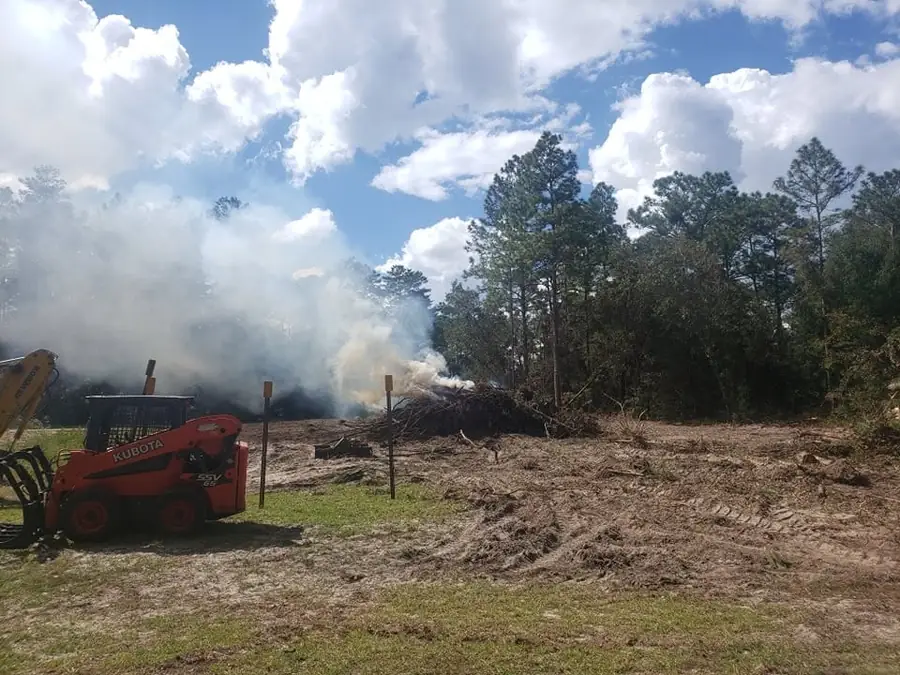
The material volume explodes. A cleared acre produces a pile of trunks and brush. A grubbed acre produces that plus every root ball, and root balls come out packed with sand. They’re heavy to move, they don’t burn well because of all the dirt in them, and they take up far more truck space than the stumps they came from. Whether they get burned on site under a Florida Forest Service authorization or loaded and hauled off is one of the biggest swing factors in the whole price — hauling means trucking plus disposal fees, which is why our debris removal and property cleanup service prices it by the load.
Every hole has to be filled. Pull a stump and you’ve made a crater. On a building site, that crater has to be backfilled with clean fill and compacted, not just raked over — or it becomes a soft spot under the slab. More stumps, more holes, more fill, more compaction.
Palmetto multiplies everything. A lot with scattered pines is a stump count. A lot with a solid palmetto mat is an entire acre of roots to rip out, and it’s the one factor that can push a “lightly wooded” price into the heavy range.
For the full breakdown of what moves the clearing half of that number, read our guide to land clearing cost per acre in Florida.
When you can skip grubbing
This is the part most estimates won’t volunteer, so we will: plenty of land in Marion County never needs to be grubbed, and paying for it there is wasted money. If nothing is going to be built, poured or driven on the ground, the roots are doing you a favor — they hold the sugar sand in place.
- Pasture reclamation. Getting overgrown pasture back to grass around Citra, Reddick and Ocklawaha. Mulch or clear it, grind any stumps a mower would hit, and let the roots rot in place.
- Trails, views and fire breaks. Opening up wooded acreage so you can walk it, see through it or protect it. Grubbing here just creates bare sand that washes out.
- Land that stays wooded. Clearing the understory from under a canopy you’re keeping.
- Around trees you’re keeping. You can’t grub inside a keeper tree’s root zone without damaging the tree. On selective clearing jobs we clear right up to the drip line and leave the ground alone.
For most of those jobs, forestry mulching in Ocala is the cheaper tool — one machine, no burn pile, no hauling, and nothing ripped out of the ground.
When you can’t skip it
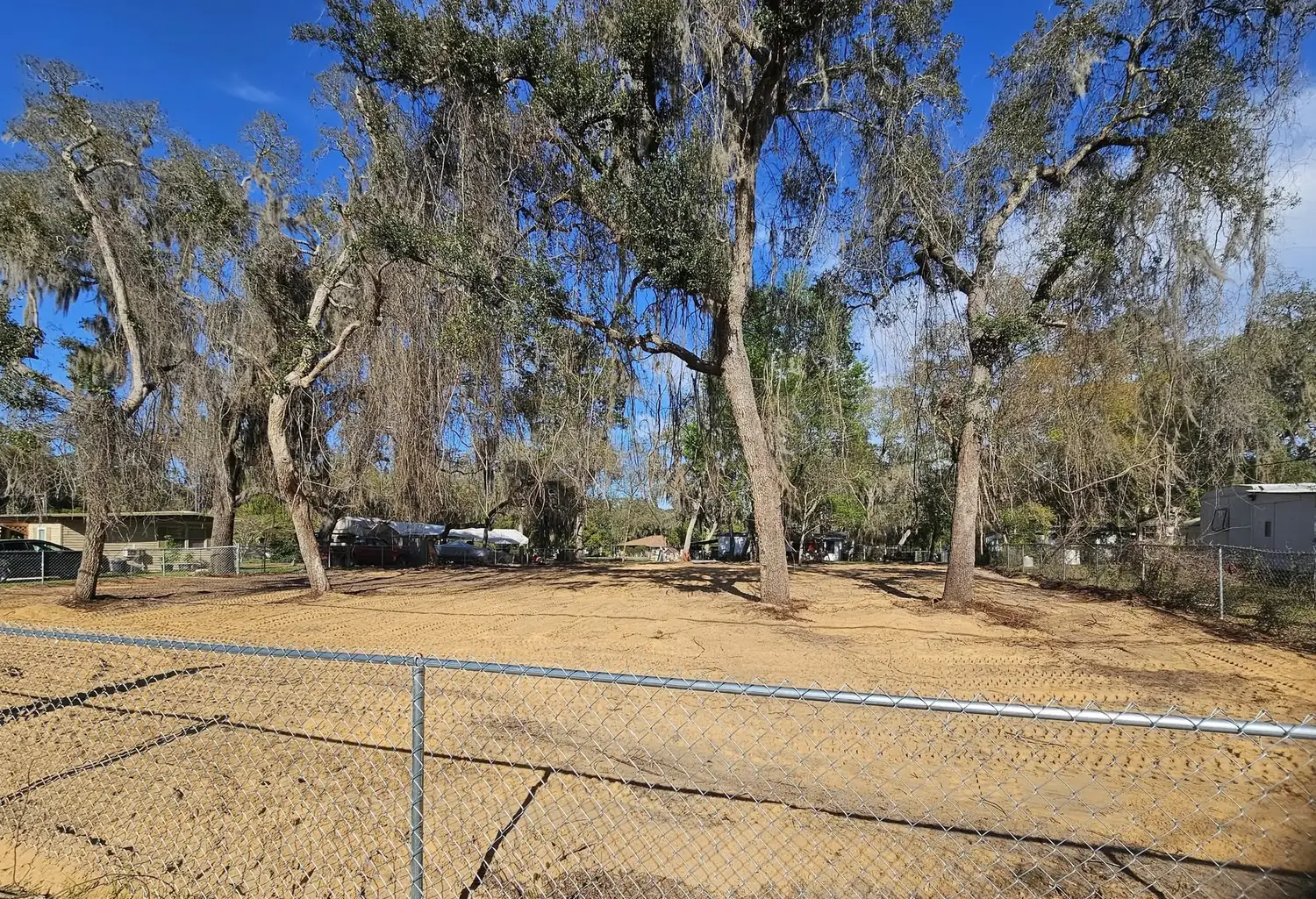
Anywhere the ground has to carry weight and stay level, the roots come out. No exceptions, no “grind it and we’ll see.”
The list of places that need grubbing is short and specific:
- Building pads — house, barn, shop, garage, manufactured home. Our site preparation and building pads in Ocala work always grubs the footprint and a working margin around it.
- Driveways — a rotting root under limerock turns into a rut exactly where the tires run.
- Septic drain fields — the drawing calls for clean, compactable soil, not roots.
- Riding arenas — a soft spot over an old stump is a soundness risk for a horse.
- Anywhere you’re bringing in fill — fill over organics is fill that sinks.
The money-saver: grub the footprint, not the whole lot
Here’s the move that saves the most on a residential lot, and it’s the one a contractor charging by the acre has no reason to mention. You almost never need the entire parcel grubbed. You need the pad, the driveway, the septic area and room for trucks to work. The rest of the lot can be cleared and left rooted, or mulched.
Grub the whole lot
Every stump and root out, edge to edge
Grub the footprint only
Pad, drive and septic grubbed; the rest cleared or mulched
Which one you want: On a typical homesite, grub what gets built on plus a working margin, and clear or mulch the rest. It costs less, washes less, and lets you keep the trees that made you buy the lot.
After grubbing, the footprint gets backfilled, compacted and shaped — that’s our land grading and leveling in Ocala work, and on a building lot it’s quoted on the same sheet as the clearing.
How to read “clearing and grubbing” on an estimate
A fair estimate in Marion County separates the two, or at least says plainly what “grubbed” means. Here’s what to look for, and what should make you ask a second question:
- “Cleared” with no mention of stumps. That usually means the stumps stay. Fine for pasture. Not fine for a pad.
- “Grubbed” that turns out to mean ground. Ask directly: are the root balls coming out, or are you grinding them? Those are different jobs at different prices.
- Grubbing with no disposal line. The root balls have to go somewhere. If the estimate doesn’t say burned or hauled, find out before the pile is sitting in your yard.
- Grubbing with no backfill or compaction. A hole raked full of loose sand is a soft spot. On a building site, the holes get filled and compacted.
How we scope a clearing and grubbing job
From walk-through to written estimate
Usually two to four days from your call to a number in your hand.
- You tell us the end use Homesite, barn, drive, septic, pasture, trails. We mark the footprint that has to be grubbed before we price anything.
- We walk it with you Stump count and size, palmetto coverage, trees you are keeping, wet spots, access, and where the root balls can go.
- We check the permit picture Protected trees, wetlands, gopher tortoise burrows, and a burn authorization if the pile is burning on site.
- You get a written, itemized number Clearing, grubbing, disposal and grading as separate lines, so you can see exactly what grubbing costs on your lot and where it can be skipped.
- One mobilization Clearing, grubbing and rough grading done in one visit by the same machines, so you pay to bring equipment out once.
Where we clear and grub
We’ve been clearing and grubbing lots across Marion County since 2009 — land clearing in Silver Springs Shores, land clearing in Marion Oaks, land clearing in Belleview, land clearing in Summerfield, land clearing in Dunnellon, land clearing in Citra, land clearing in Fort McCoy and land clearing in Reddick, plus everywhere in between on our service areas page. The full scope of the work lives on our land clearing service in Ocala page.
Free on-site estimates
Want a real number for your property?
Tell us where it is and what you're planning. We'll walk it with you and give you a written estimate — free, no obligation.
Straight answers
Frequently asked questions
What is grubbing in land clearing?
What is the difference between clearing and grubbing?
How much does clearing and grubbing cost?
Is stump grinding the same as grubbing?
Do I need grubbing to build a house?
Can you clear land without grubbing it?
Costs, permits, timing and more: read the full land clearing FAQ →
Free estimates
Get your estimate today
Tell us where the property is and what you need done. We'll call you back and come walk it with you — free, and no obligation either way.