Cost Guide · 9 min read
Stump Grinding Cost in Ocala: Per-Stump, Per-Inch, and When to Dig It Out Instead
Stump grinding in Ocala runs about $120–$400 for the first stump and $30–$60 for each one after it on the same trip, or $2–$5 per inch of diameter if the shop prices by size. Those are the 2026 industry ranges. A single pine stump in a Marion Oaks side yard sits at the bottom of them; a live oak measured across its root flare sits at the top. Digging the stump out instead costs more — and if anything is getting built, poured or driven over that spot, it is the only version that works.
Call five stump companies in Marion County and you will get five different ways of pricing the same stump. One quotes per stump. One quotes per inch. One wants to know how many. One asks whether it is an oak. And one just says “it depends,” which is the answer that sent you to Google in the first place. None of them are lying — they are pricing the same handful of things in different orders. This guide lays out both pricing models with the published numbers, walks through what actually moves the price on our side of I-75, and is honest about the case where grinding is the wrong job to buy.
The two ways stump grinding gets priced
Every stump quote in Ocala is one of two models, or a blend of them. Neither is a scam. They just favor different jobs, and knowing which one you are looking at is how you compare two quotes that do not look alike.
| Pricing model | 2026 industry range | Where it favors you | Where it doesn’t |
|---|---|---|---|
| Per stump | $120–$400 first stump, $30–$60 each additional | Several average stumps on one lot — the add-on rate is where the value is | One huge stump: the flat rate has to cover the worst case |
| Per inch | $2–$5 per inch of diameter, usually with a minimum | One or two big stumps — the price scales with the actual work | Lots of small stumps: every one of them hits the minimum anyway |
| Per hour or per day | Machine-time rate, quoted on site | Whole-lot work where nobody wants to count 40 stumps | A single stump in a back yard — you pay for the trip either way |
Dollar figures are published national ranges (Angi, HomeGuide, LawnStarter, 2026), not an E & C Hope quote. Hourly and daily rates vary too much by machine and region to publish a fair number.
The per-inch model has a catch that trips people up: the minimum. Do the math on a 12-inch stump at $2–$5 an inch and you get $24–$60, which is less than it costs any contractor to load a grinder, drive to Belleview and unload it. So the shop carries a minimum charge, and that minimum is the same number the per-stump shops call their first-stump rate. Below roughly 20 inches, the two models converge. Above it, they start to separate.
| Stump | Per-inch math at $2–$5 | What you actually pay |
|---|---|---|
| 12-inch pine | $24–$60 | The minimum — plan on the $120–$400 first-stump range |
| 24-inch oak | $48–$120 | Still near the minimum on most quotes |
| 36-inch live oak at the flare | $72–$180 | Now the per-inch rate is doing real work |
| 48-inch live oak at the flare | $96–$240 | Upper end of the first-stump range; ask how deep |
| 10 stumps, 12–18 inch | — | $390–$940 at first-stump plus nine add-ons |
Arithmetic on the published industry ranges above, to show how the two models land on real stumps. The big-oak rows assume diameter is measured across the root flare, which is where most shops measure — see the next section.
What actually moves the price in Marion County
National guides stop at “size and quantity.” Those matter, but they are not the whole list — and two of the items below are specific to the ground under Ocala.
Diameter, and where it gets measured
Diameter is the biggest single factor, and the argument is always about where the tape goes. A live oak that measures 20 inches across the trunk at chest height can measure 36 inches across the root flare at the ground, and the flare is what the grinder has to chew through. That is the honest measurement. It is also why a “cheap” per-inch rate measured at the flare can cost more than a higher rate measured at the trunk. Before you compare two per-inch quotes, ask each one the same question: where do you measure?
How many, and how close together
The second stump is always cheaper than the first, which is what the $30–$60 add-on rate is telling you. The grinder is already unloaded, the operator is already there, and the next stump is thirty feet away. That is why grinding stumps as part of a land clearing job in Ocala costs less per stump than a stand-alone visit: the machine is on site anyway. If you have one stump now and know you will have three more next spring, waiting and doing four at once is a real saving, not a sales line.
Access: gates, slopes and septic fields
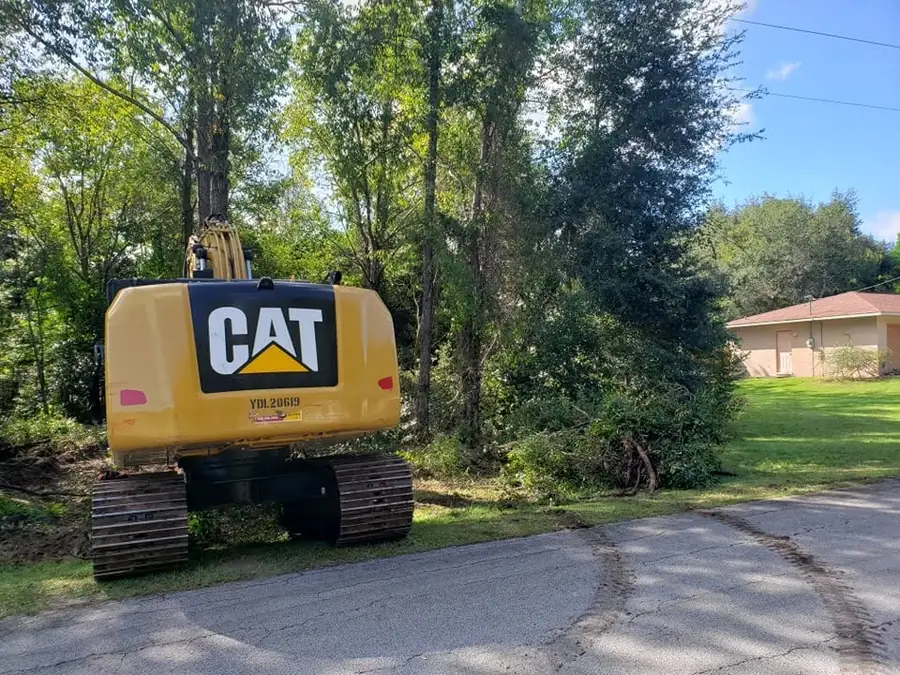
A grinder has to get to the stump. In the older Silver Springs Shores and Marion Oaks lots that means through a standard gate, past a chain-link fence, and — critically — not across the drain field. Small grinders fit through a gate. Big ones do not, and a stump that needs a big machine in a yard with a 36-inch gate is a harder job than the same stump in an open pasture off SR-200. Slopes, a stump wedged against a foundation, and stumps under a low canopy all add time. Tell the contractor about the gate before they drive out.
Sugar sand versus rock
Here is the Marion County-specific one. Most of the county sits on deep sugar sand, and sand is the friendliest thing a grinder ever meets — the teeth go through the flare and the top of the root ball without complaint. But there are pockets, especially toward the north and west of the county around Reddick, Dunnellon and parts of Anthony, where limerock or hardpan sits close to the surface. Rock eats grinder teeth. A set of carbide teeth is a real cost, and an operator who hits rock at the second stump either slows down or replaces teeth, and either way the price goes up. If you know your lot is rocky, say so. If you do not know, we will tell you when we look.
Species and age
A pine stump is soft and grinds fast. A live oak or a laurel oak is dense, wide at the base, and holds together. A fresh-cut stump grinds easier than one that has been sitting for three years, and the roots of an old oak spread wider than you think — if you want the surface roots ground too so they stop wrecking mower blades, that is extra time and worth pricing in up front.
What happens to the grindings
Nobody budgets for this one. A ground stump does not disappear — it turns into a mound of chips and dirt that is often two or three times the size of the stump you could see. Most grinding prices assume that pile stays on site for you to rake into beds or spread out. Hauling it off means a loader and a truck, so it is a separate line, and our debris removal and property cleanup service is how we price it when the pile is bigger than a wheelbarrow job. One thing not to do: fill the hole with the grindings. They break down, the spot sinks, and you have a dip in the yard by next summer.
Grinding versus digging it out
This is the decision that matters more than any pricing model, and it is the one most stump-only outfits do not bring up because they only own a grinder. There are two entirely different jobs that both get called stump removal. They leave completely different things in the ground.
Grind it flush
Cutter wheel takes it 4–8 inches below grade
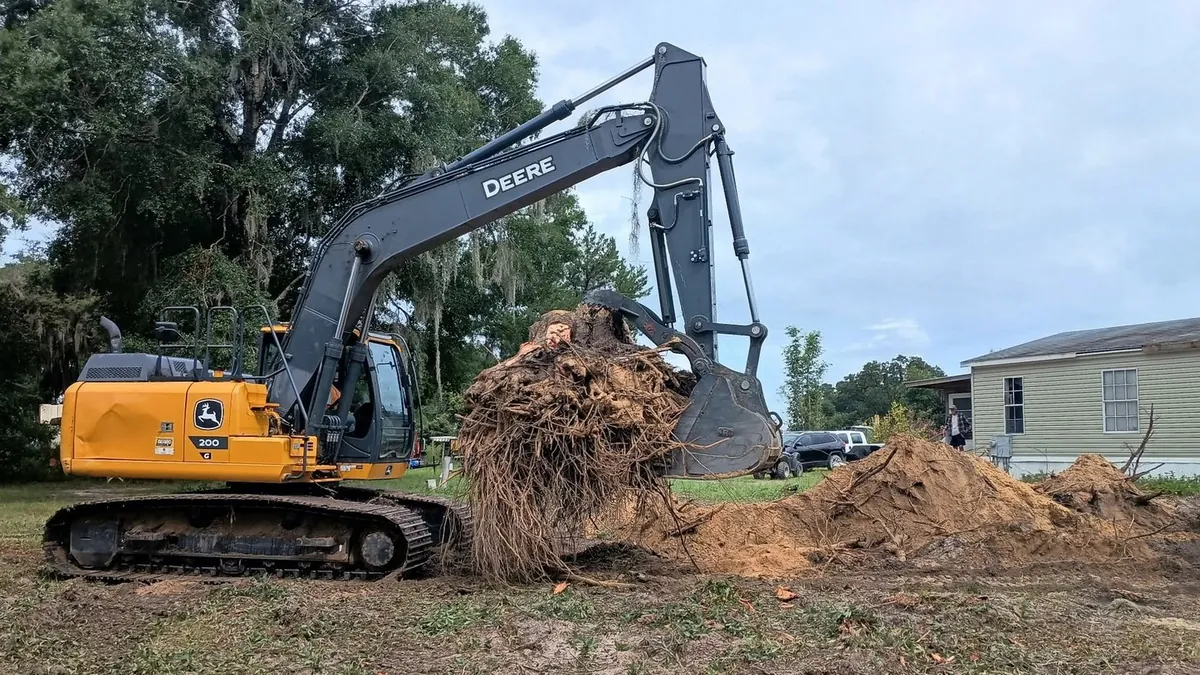
Dig it out
Excavator lifts the entire root ball
Which one you want: Price the job by what is going on top of the ground, not by the cheapest way to make the stump disappear. If you will only mow over it, grind it. If anything gets built, poured or driven on that spot, dig it out.
The stump grinding and removal page covers both versions of the job. The short version is that we own both machines, so we do not have a reason to talk you into either one.
When to dig it out instead
Grinding is the right call most of the time. Here is the specific list of times it is not, because these are the jobs where the stump has to come out root ball and all.
- A building pad. Any slab, house, barn, shop or manufactured home. The pad is only as stable as what is under it, and our site preparation and building pads in Ocala work always pulls stumps out from under the footprint — not ground flush, out.
- A driveway. Limerock and crushed concrete are only as good as the base under them. A rotting root ball under a limerock driveway in Ocala shows up as a rut that gets deeper every rainy season, exactly where the tires run.
- A septic drain field. The health department drawing wants clean, compactable soil. Roots and rotting wood in a drain field are a problem you do not want to discover during the inspection.
- A fence line or an arena. Posts set next to a root ball shift as it rots, and a riding arena base over old stumps develops soft spots — a real soundness risk for a horse.
- A tree you do not want back. The trunk will not regrow after grinding, but some species — laurel oak, camphor, Chinese tallow — push suckers from the remaining roots for years. Full removal ends that.
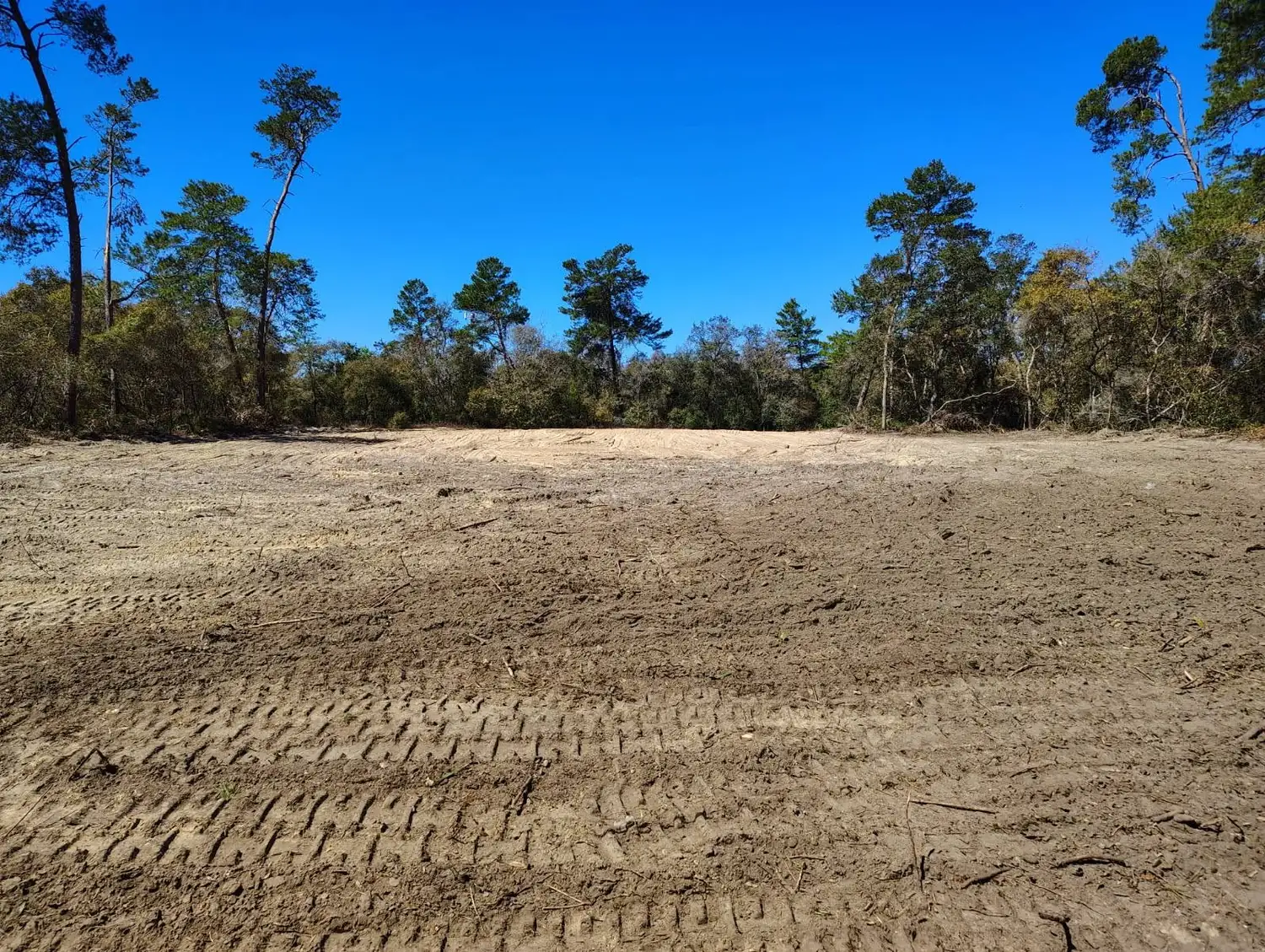
Once the root ball is out, the hole gets backfilled with clean fill and compacted, and the ground usually needs a pass of land grading and leveling in Ocala so the spot does not read as a dip after the first rain. If there are more than a handful of stumps and the lot is being prepped to build, this all becomes one job with one mobilization, which is meaningfully cheaper than three contractors on three weeks. Our land clearing cost per acre in Florida guide has the per-acre numbers for that version.
Three ways a stump quote goes wrong
A fair stump quote in Ocala tells you the price model, where diameter is measured, how deep the grind goes, and what happens to the grindings. If any of those four are missing, ask. These are the specific ways people get burned:
- The per-inch price that quietly measures at the flare after the job. You were told 20 inches. The invoice says 32. Both can be true of the same stump — ask where they measure before, not after.
- A grind quote with no depth. “We grind stumps” can mean two inches below grade, which is not enough to get topsoil over it and grow grass. The industry standard is 4–8 inches, and the quote should say so.
- The pile nobody mentioned. The stump is gone, and a mound of chips and sand the size of a hot tub is sitting in your yard. If the quote does not say what happens to the grindings, it means they stay.
How we price a stump job
From photo to written estimate
Usually same-day for a single stump, two to four days for a whole lot.
- You tell us what is going on top Lawn, pasture, a slab, a driveway, a septic field. This one answer decides grind versus dig, and we ask it first so we do not quote the wrong job.
- We measure at the flare Widest point at ground level, roots included. The number we quote is the number the machine has to chew through, so the invoice matches the estimate.
- We look at access and ground Gate width, slope, the drain field, and whether the lot is sugar sand or sitting on rock. Rock changes the teeth we bring and the time it takes.
- You get a written number Per stump or per inch, whichever is cheaper for your lot, with the grinding depth and what happens to the grindings written down. Digging it out is priced as its own line if that is what the job needs.
- We schedule it Single back-yard stumps are a short visit. Whole lots get scheduled with any clearing, pad or driveway work so the machines only mobilize once.
Where we grind and pull stumps
We handle stumps across Marion County — land clearing in Silver Springs Shores, land clearing in Marion Oaks, land clearing in Belleview, land clearing in Summerfield, land clearing in Ocklawaha, land clearing in Dunnellon, land clearing in Citra and land clearing in Reddick, plus The Villages and everywhere in between. The rest of the list is on our service areas page. When the stump is still a standing tree, our tree and brush removal in Ocala crew takes it down first, and the stump gets priced as part of the same visit.
Free on-site estimates
Want a real number for your property?
Tell us where it is and what you're planning. We'll walk it with you and give you a written estimate — free, no obligation.
Straight answers
Frequently asked questions
How much does stump grinding cost in Ocala?
Is stump grinding priced per stump or per inch?
How do you measure a stump for a per-inch quote?
Is it cheaper to grind a stump or dig it out?
Can you build a driveway or a slab over a ground stump?
Do the grindings cost extra to haul away?
Costs, permits, timing and more: read the full land clearing FAQ →
Free estimates
Get your estimate today
Tell us where the property is and what you need done. We'll call you back and come walk it with you — free, and no obligation either way.